
Santa Ana Gas Line installs, resets and tests seismic gas shutoff valves across Santa Ana, California. We also get called when one has done its job and nobody knows it — a house with no gas, no leak, and no obvious explanation is very often a tripped earthquake valve.
A seismic gas shutoff valve is a mechanical device fitted on the customer-owned piping that closes on ground movement, cutting the supply to the building before a damaged line inside it can leak. California requires them in defined circumstances under Health and Safety Code Section 19180, and many are also fitted voluntarily or at the request of an insurer.
The important thing to understand is that the valve is not a leak detector. A motion-sensitive valve built to ASCE 25-97 responds to shaking, not to gas. It will close during an earthquake whether or not there is anything wrong with your piping, which is exactly what it is designed to do — and it is why so many people meet theirs for the first time by having no hot water.
What the Valve Does
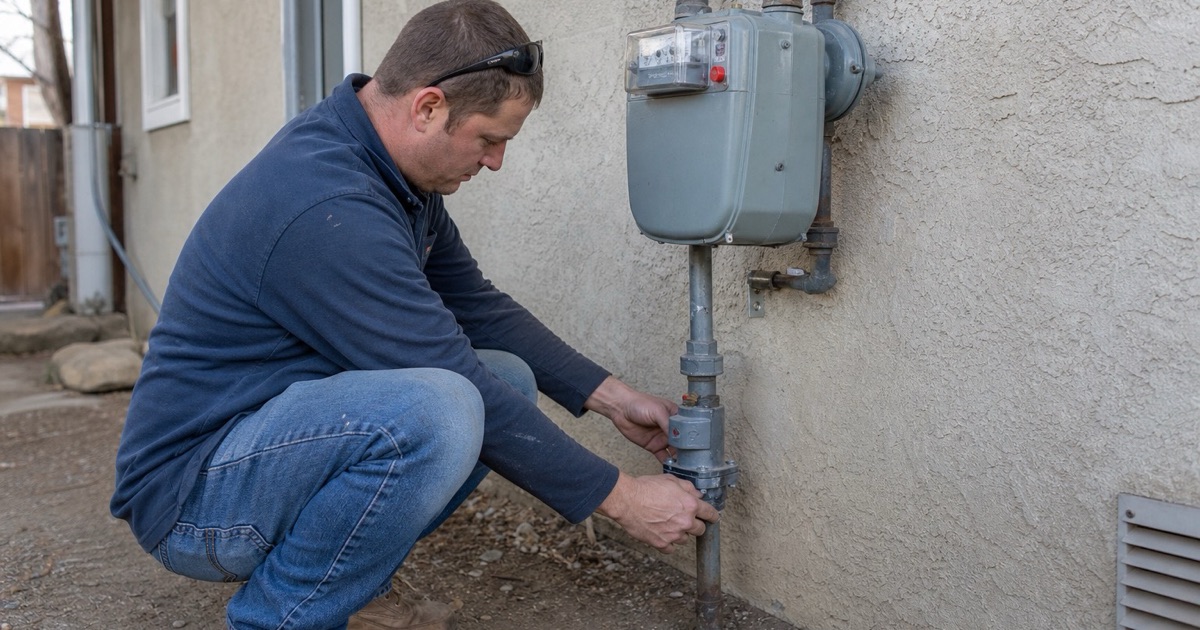
Motion-Sensitive Seismic Valves
A seismic valve holds a mechanism that releases when the ground moves beyond a threshold, dropping the supply closed. It is entirely mechanical, needs no power, and does not reset itself. Built to ASCE 25-97 and certified for use in this state, it is the device most people mean when they say earthquake valve, and it sits on the customer-owned side of the meter.
The Excess Flow Valve Is a Different Device
A non-motion-sensitive excess flow shutoff valve is frequently confused with a seismic valve and does something different: it closes when flow through it exceeds a set rate, which is what happens if a line is severed. It responds to the pipe failing rather than to the ground shaking. A building can have one, the other, or both, and telling them apart matters because they trip for unrelated reasons.
Where It Sits and Who Owns It
These valves are installed on the customer-owned piping downstream of the meter, which makes them the property owner’s to install, maintain and reset — not the utility’s. That ownership point catches people out, because the device sits right next to a meter that belongs to somebody else. It also means the work is permitted through the city like any other alteration to your piping.
When a Valve Has Tripped
No Gas, No Leak, No Explanation
The classic presentation is a whole building with no gas at all — every appliance out at once — after shaking, with nothing obviously wrong. Because the valve is mechanical and unobtrusive, plenty of owners do not know one is fitted. We identify whether a valve has closed, establish which type it is, and check the system before anything is reopened.
Resetting It Properly
Resetting is not simply a matter of turning something back. The system should be checked before gas is restored, because if the shaking that closed the valve also damaged piping, reopening the supply is precisely the wrong move. Once the system tests sound, we reset the valve, restore the supply, and then relight and check every appliance in the building in turn.
Nuisance Trips and Failing Valves
A valve that closes without meaningful ground movement, or one that will not reset and hold, has usually reached the end of its service life. These are mechanical devices and they do age. We test the valve rather than assuming it, and where it has failed we replace it rather than repeatedly resetting something that is going to strand you again.
Installation and Testing
Fitting a Valve
A valve has to be correctly sized for the connected load and correctly oriented to function — the sensing mechanism depends on it being mounted the way the manufacturer specifies, and a valve fitted at the wrong angle either fails to trip or trips constantly. We size it from the load, mount it correctly, and test it on completion. The work is permitted and inspected like any other piping alteration.
Insurance, Sales and Compliance
Requests often arrive with a document attached — an insurer asking for one, a sale where it has been raised, or an obligation under Health and Safety Code Section 19180. We install to the applicable standard, pull the permit, and give you the written test result and the permit paperwork so the requirement can actually be evidenced rather than merely asserted.
Living With the Valve
Testing It Before You Need It
A device that sits untouched for years and is expected to work on the one day it matters is worth testing occasionally, and almost nobody does. We test the valve as part of any inspection or other gas work on the property, which costs nothing extra while we are on site. A valve that will not reset and hold is far better discovered on an ordinary Tuesday than after an earthquake, when it strands a household with no gas and every contractor in the county is already booked.
Knowing Whether You Have One
Plenty of owners genuinely do not know whether a valve is fitted, particularly where a property has changed hands or the meter is tucked behind planting at the side of the building. It is a quick thing to establish and worth knowing before you need the answer. If one is fitted we will tell you which type it is and whether it is still serviceable; if not, we will tell you whether your circumstances call for one.
- Licensed & Insured
- Same-Day Leak Response
- Free Written Quotes