
Santa Ana Gas Line relights water heaters, furnaces, wall heaters, ranges and dryers across Santa Ana, California, and works throughout the surrounding cities including Tustin, Orange, Garden Grove, Fountain Valley and Westminster. We do the relight, and then we find out why it went out — because a pilot that keeps failing is reporting a fault somewhere else, and relighting it again is not a repair.
A pilot light does one job: it holds a thermocouple hot so the gas valve stays open. When it goes out, the safety system has worked exactly as designed. The question worth paying for is what made it go out, and the honest answer is that it is often not the pilot assembly at all. Low delivered pressure, a partially blocked line, a failing regulator, a missing sediment trap or a draft problem will each put out a pilot that is in perfect condition.
That distinction is why the same appliance gets a new thermocouple twice in a year. The part gets replaced, the pilot lights, everyone is satisfied, and the underlying supply problem is untouched — so it goes out again. We read the pressure at the appliance with a manometer before anybody sells you a part, which takes a few minutes and settles the question.
Getting the Appliance Lit Again
Water Heaters
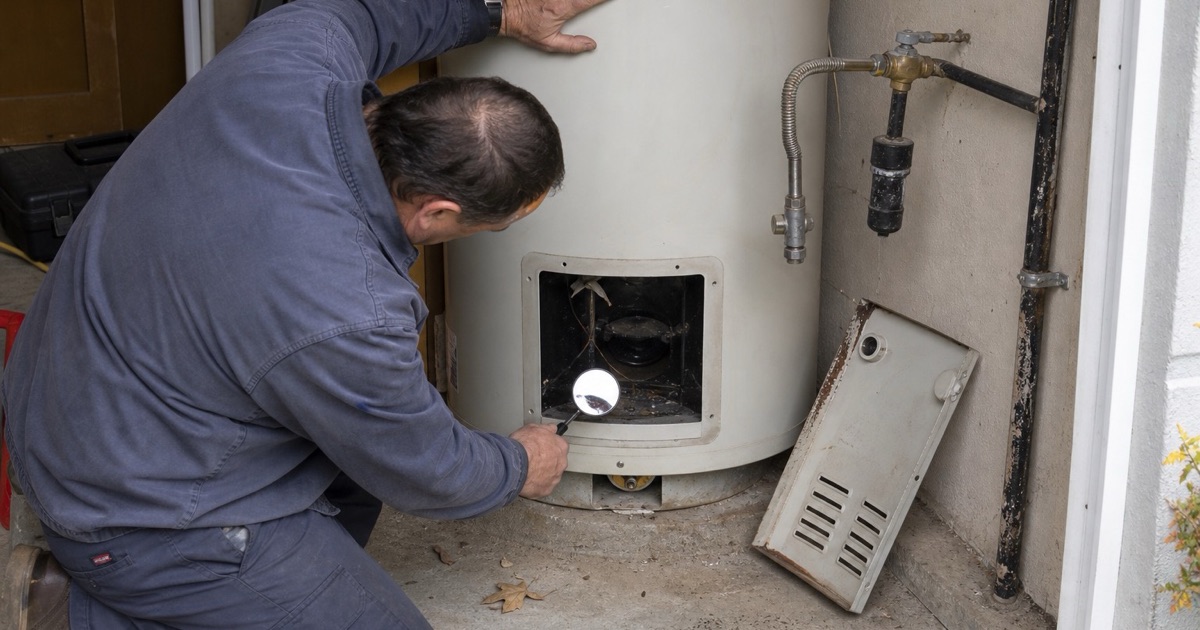
A water heater is the appliance most people notice first, because the hot water goes cold and nothing else obviously changes. We relight it, then confirm it is actually receiving the pressure it is rated for and that the flame is stable through a full cycle rather than only at the moment of lighting. If the pilot has gone out more than once, we treat the relight as the beginning of the visit rather than the end of it.
Furnaces and Wall Heaters
Wall heaters are common in housing of this era and are frequently the appliance furthest from the meter, which makes them the first to suffer when a line is marginal. Relighting one is straightforward; establishing whether it went out because of its own thermocouple, because the branch feeding it is starved, or because it is spilling combustion products is the part that matters. We check the burner, the pressure and the draft rather than only the pilot.
Ranges, Dryers and Standing Pilots
Older ranges and dryers with standing pilots go out for the same reasons and are relit the same way, and they are worth checking whenever anything else in the house has. If several appliances have lost their pilots at once, that is not several coincidences — it points at the supply they share, or at an interruption upstream such as a tripped seismic valve or a utility shutoff.
Why It Will Not Stay Lit
Pressure at the Appliance
The first measurement we take is the delivered pressure at the appliance while it is running, read on a manometer. An appliance that is starved will light and then drop out, especially when something else on the same branch fires up. This is extremely common where an appliance has been added to a line that had no capacity left — a tankless heater, a second cooktop, a pool heater teed off an existing branch that was already at its limit.
Thermocouples, Regulators and Sediment
When the supply checks out, the fault is at the appliance, and then it usually is the thermocouple or the pilot orifice. A failing line pressure regulator will also produce an unstable flame, and debris reaching the burner from an unprotected line will block an orifice — which is what a sediment trap, sometimes called a drip leg, exists to prevent. We replace what has actually failed and tell you which of these it was.
Draft, Spillage and Carbon Monoxide
A pilot can be blown out by the appliance’s own poor venting, and that scenario deserves more attention than a relight. An appliance that is spilling combustion products back into the room is a carbon monoxide question, and an appliance running on inadequate pressure burns incompletely, which produces carbon monoxide where a correctly fed one would not. We check for spillage at the draft hood as a matter of course, not only when asked.
The Appliance Has Simply Reached the End
Sometimes the honest finding is that the appliance is finished. A water heater with a corroded burner assembly, a wall heater whose heat exchanger is suspect, or a unit old enough that the replacement part is no longer made will keep putting its pilot out no matter how many thermocouples go into it. We will tell you when we think you are spending repair money on something that will not hold, and we will say so before you have paid for the part rather than after.
What We Check Before Leaving
A relight is not finished when the flame catches. We run the appliance through a full cycle to confirm the pilot holds under load, verify the delivered pressure while it is firing rather than at rest, and check for spillage at the draft hood. Where more than one appliance shares the branch, we run them together, because a supply that is marginal only reveals itself when two things fire at once.
When the Gas Has Been Off
After a Shutoff, a Repair or a Move-In
When supply has been interrupted, every gas appliance in the building has to be relit and checked in turn, and air has to be purged from the lines. This is the situation people most often try to handle themselves and most often leave half done, ending up with a lit water heater and a furnace that will not catch. We work through the whole building so nothing is left off.
After a Tripped Earthquake Valve
California requires seismic gas shutoff valves in defined circumstances under Health and Safety Code Section 19180, and a motion-sensitive valve built to ASCE 25-97 closes on ground movement whether or not anything is wrong with your piping. Most people learn the valve exists only when they have no gas and no explanation. We identify a tripped seismic valve, reset and test it, and distinguish it from a non-motion-sensitive excess flow shutoff, which closes for a completely different reason.
After a Red Tag
If the gas company tagged the meter, the supply stays off until the flagged fault is corrected by a licensed contractor and the work is signed off — the utility condemns a system, it does not repair one. We carry out the correction, arrange the re-light appointment, and then bring every appliance back into service and verify it. That last step is ours rather than the utility’s, and it is the one that decides whether you actually have a working house again.
- Licensed & Insured
- Same-Day Leak Response
- Free Written Quotes