
Santa Ana Gas Line installs, repairs and replaces gas piping throughout Garden Grove, California, for homeowners, landlords, property managers and tenants. We handle leak detection, repipes on original steel, buried yard runs, appliance connections, meter work and the permits and inspections that go with all of it. The work here spans single-family houses, duplexes and larger multifamily buildings, and the questions each raises are different. What they share is that somebody other than the occupant usually has to authorize the work.
Garden Grove is one of the larger markets in this ring, and a substantial share of its housing is rented rather than owner-occupied. That single fact changes gas work more than most people expect. It introduces a second decision-maker, an inspection regime that owner-occupied property never meets, and a set of obligations that fall on whoever holds the title rather than whoever turns on the stove.
So the first question on most jobs here is not technical. It is who owns the fault, who authorizes the repair, and whose deadline the work is running against. We establish that before quoting, because a quote sent to the wrong party is a quote that sits unanswered while a household has no hot water.
Rental Property and Inspection Exposure
What an Inspector Actually Looks For
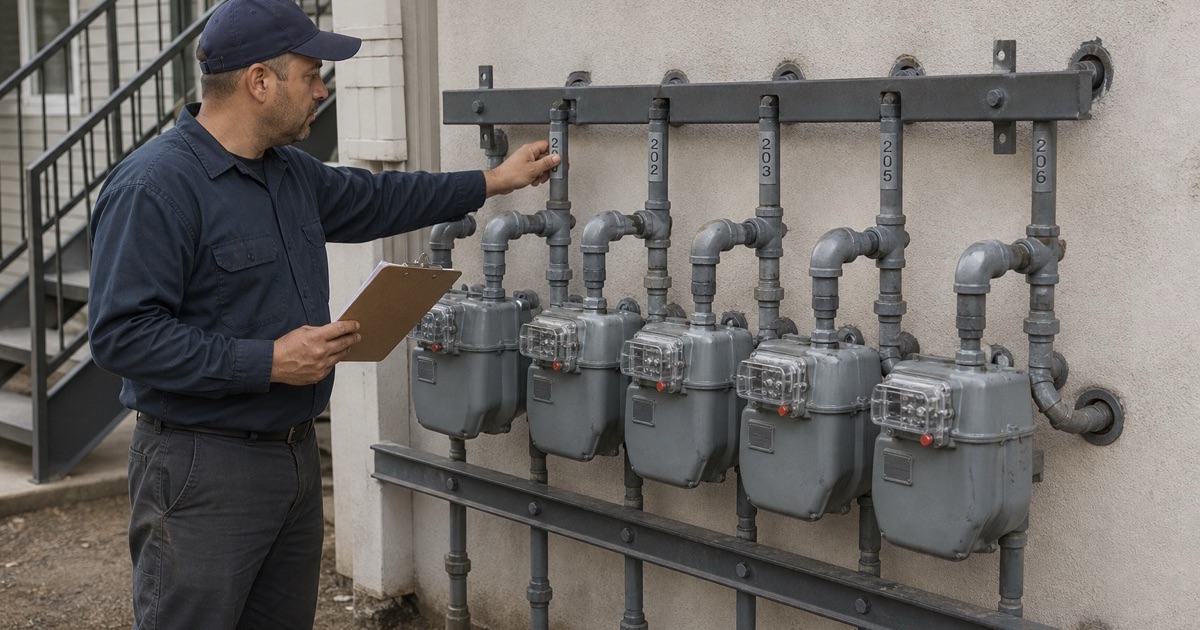
Gas piping in rental housing is inspected in a way that owner-occupied property is not, and the findings are predictable enough to prepare for. An inspector looks for unpermitted alterations, missing or inaccessible appliance shutoffs, unsupported or corroded pipe, and flexible connectors that have been reused past their service life. None of those are exotic and all of them are common on housing of this age. The pattern matters because it means a survey ahead of the visit can tell you almost exactly what will be written up.
We carry out that survey and give you the findings in writing with a fixed price against each item. Correcting them on your own schedule costs materially less than correcting them under a notice with a date attached. It also avoids the situation where a tenant is displaced because something was found that could have been dealt with quietly two months earlier. That is the practical argument for doing this before rather than after.
Unpermitted Work Inherited From a Previous Owner
Rental property changes hands, and alterations made by a previous owner arrive with the building. Work that was never permitted usually surfaces at a sale, a refinance, an insurance claim or an inspection, and by then it has a deadline attached and very little room to negotiate. The route through is an inspection of what is actually there, correction of anything that fails the current code, and a permit that closes properly. None of that is dramatic, but it does take time that a deadline may not allow.
We survey first and set out the scope before you commit to anything. On a good number of these the physical work turns out to be modest and the paperwork is the real job. Knowing which of the two you are facing changes how you budget for it. It also changes whether you handle it now or when somebody forces the question.
Turnover as the Window for Access
The hardest constraint on rental gas work is not the pipe, it is getting into an occupied unit. A vacancy between tenancies is the one period when a system can be surveyed, tested and corrected without coordinating around somebody’s life. That window is usually short and it is usually busy with painting and flooring. Gas work is easy to leave off the list precisely because nothing is visibly wrong with it.
We schedule around turnover where a landlord wants to work that way, and we can survey and quote in one visit so the decision can be made quickly. Where a whole building needs attention, phasing it across successive vacancies is frequently more practical than attempting it all at once. That is a planning conversation rather than a technical one, and it is worth having early.
Looking for gas line closer to North Tustin? See North Tustin Gas Line.
Multifamily and Shared Systems
Where One System Serves Several Homes
Duplexes, fourplexes and larger buildings raise a question single-family work does not: where the landlord’s piping ends and each tenancy’s begins. Systems in older multifamily buildings frequently grew by addition rather than by design, and the boundaries are not always obvious from the pipe itself. Establishing which meter feeds which unit, and where the isolation points actually are, is the first thing we do. It decides who authorizes the work and whose supply has to be interrupted to carry it out.
Getting that wrong is expensive in ways that have nothing to do with pipework. It can mean a repair billed to the wrong party, or a shutdown affecting units that did not need to lose service. We map it and put it in writing before anything is opened up. That document is often more useful to an owner than the repair itself.
Isolating Without Shutting Everyone Down
Work on an occupied multifamily building has to be sectioned, and what makes that possible is having isolation valves in sensible places. Older buildings frequently do not, which turns a repair to one unit into a shutdown for the whole building. That is disruptive, it generates complaints, and it makes routine maintenance something an owner avoids rather than schedules. The result is deferred work that gets more expensive.
Where a system cannot be sectioned properly, we will say so and quote the valves that would fix it. It is a small addition during work that is already happening and it changes the economics of every future job on the building. Owners who have done it once rarely go back.
Sizing for a Building That Filled Up
A building specified decades ago for a particular appliance schedule is now running whatever successive tenants have installed. Added appliances, replacement water heaters at higher input, and unit conversions all draw on piping that nobody has recalculated. The symptom is not a failure but a system that underperforms whenever several units draw at once, which is exactly when people notice. It gets blamed on the appliances or on the utility.
We total the connected load and read it against the developed length before agreeing that any existing pipe can carry more. Where the arithmetic says it cannot, upsizing the trunk is the fix rather than replacing appliance parts that were never faulty. That finding comes with the measurement behind it so an owner can see why.
Older Housing and Original Steel
The Repipe Question on Owner-Occupied Homes
Alongside the rental stock there is a large owner-occupied market — the city recorded a population of 171,949 at the 2020 census — and there the question is the familiar one. Threaded Schedule 40 black steel corrodes from the inside out and fails at joints and low points, which means faults arrive in groups rather than singly across decades. A second leak within a year of the first is a pattern rather than bad luck. At that point each individual repair buys a few months and the next call is already coming.
We survey the whole system with an electronic combustible gas detector and isolate sections under test pressure, then give you the finding in writing with a fixed price against repair and against replacement. If the evidence supports a repair we will say so, including when the larger job would have been easier to sell. The decision is yours and it should be made on measurements.
The Yard Line and the Meter Position
Where a meter sits at the curb rather than against the building, the entire run back to the house is customer-owned pipe rather than the utility’s. On older lots that is routinely the longest and most vulnerable section of the whole system. It is also the section least likely to have been looked at, because nothing about it is visible and most people assume the gas company owns it. That assumption costs money in both directions.
We isolate the underground portion and test it on its own, which establishes whether a loss is above or below ground before anybody excavates. Where the meter is at the curb we tell you plainly which side of the boundary the fault sits on. That measurement regularly changes the scope of a job in the customer’s favor.
Testing, Permits and What You Keep
Every altered system is isolated, charged to test pressure and held while the gauge is watched, on an instrument whose range is no more than twice the test pressure and graduated in tenths of a psi. A coarser gauge reads a slow loss as no loss, which is how a leaking system passes a test. You keep the written result on every job. Where the work required a permit, we pull it and meet the inspector rather than leaving that with an owner or a tenant.
For rental property that documentation does a second job. It is what an inspector, an insurer or a prospective buyer asks for, and it is the difference between asserting that a system is sound and being able to show it. We hand it over as a matter of course.
- Licensed & Insured
- Same-Day Leak Response
- Free Written Quotes









